
Events (2026)
Here is a complete list of all Division C events this year, along with a short description. A comprehensive description of all of these events can be found in the Division C Rules Manual under Resources.
You can see each event in more detail by clicking either the image, or the text that appears on hover.
LIFE, PERSONAL & SOCIAL SCIENCE
Disease Detectives
Students will use investigative skills in the scientific study of disease, injury, health and disability in populations or groups of people.
Designer Genes
Teams will answer questions, solve problems, and analyze data pertaining to classic, evolutionary, and molecular genetics.
Remote Sensing
---
.jpg)
Botany
participants will demonstrate their knowledge of plant life and general botany principles.
Water Quality
Students will be assessed on their understanding and evaluation marine and estuary environments (26-27).
EARTH & SPACE SCIENCE
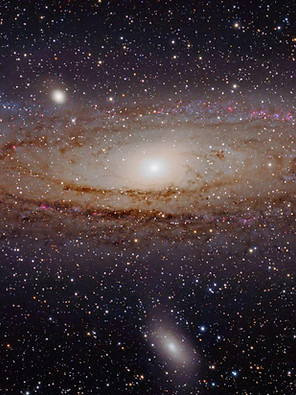
Astronomy
teams will demonstrate an understanding of stellar evolution in normal & starburst galaxies.
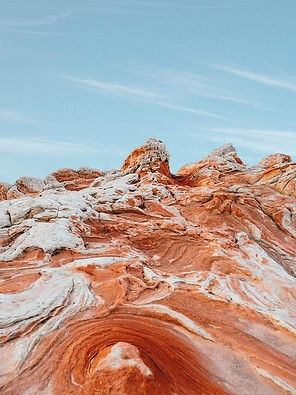
Dynamic
Planet
Participants will demonstrate an understanding of the processes involving the Earth's freshwaters. (26-27)
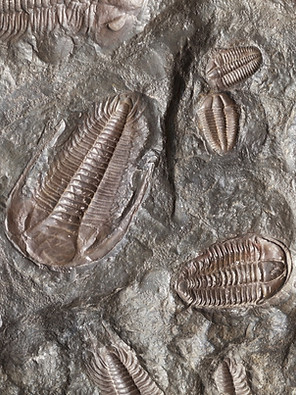
Remote Sensing
Participants will use remote sensing imagery, data, and computational process skills to complete tasks related to climate change processes in the Earth system.
Rocks and Minerals
Teams will identify and classify rocks and minerals and demonstrate knowledge of how rocks and minerals help to understand geologic processes, interpretation of Earth’s history, the development of natural resources, and use by society.
PHYSICAL SCIENCE & CHEMISTRY

Chemistry
Lab
Teams will complete one or more tasks and answer a series of questions involving kinetics and gases. (26-27)

Forensics
Given a scenario and some possible suspects, students will perform a series of tests. These tests, along with other evidence or test results, will be used to solve a crime.
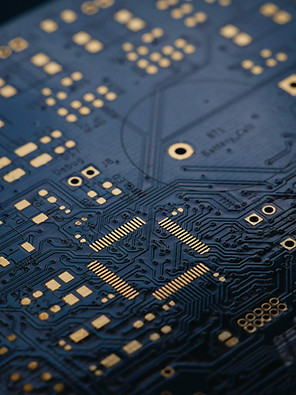
Circuit Lab
Participants must complete tasks and answer questions about electricity and electronics.
.jpg)
Protein Modeling
participants will be assessed on a written exam and prior to the competition will use computer visualization and online resources to construct a physical model of the sialic acid binding site of the 2009 H1N1 influenza hemagglutinin protein.

Hovercraft
Prior to the competition, participants will design, construct, and calibrate a self-propelled air-levitated vehicle that moves down a track.
TECHNOLOGY & ENGINEERING
Electric Vehicle
Teams must design, build and test one vehicle that uses electrical energy as its sole means of propulsion to travel as quickly as possible and stop close to a Target Point.

Wright Stuff
teams will construct, collect data on test flights, analyze and optimize free flight rubber-powered Airplane to achieve maximum time aloft.
Wifi
Lab
Teams must construct an antenna device prior to the tournament that is designed to transmit/receive a signal at 2.4 GHz and complete a written test on the principles of electromagnetic wave propagation.

Mission Possible
prior to the competition, participants design, build, test, and document a Rube Goldberg®- like Device that completes required Start and Final Actions through a series of specific actions.

Boomilever
Teams will design and build a cantilevered beam or truss structure that extends from a vertical Testing Wall and supports a load at a specified distance from the Testing Wall.
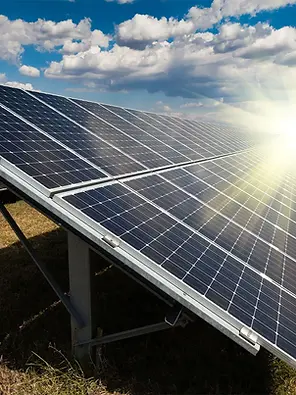
Thermodynamics
teams will construct a device prior to the tournament designed to collect heat and complete a written test on thermodynamic concepts.
INQUIRY & NATURE OF SCIENCE
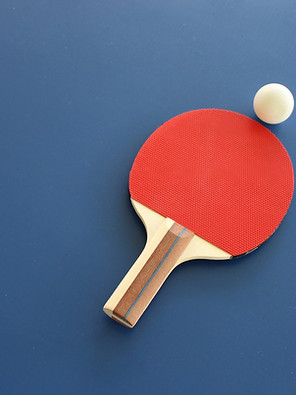
Ping Pong Parachute
teams will design, build, and bring up to two bottle rockets to the tournament to launch a ping pong ball attached to a parachute to stay aloft for the greatest amount of time.

Codebusters
Teams will cryptanalyze and decode encrypted messages using cryptanalysis techniques for historical and modern advanced ciphers.

Experimental
Design
This event will determine a participant's ability to design, conduct and report the findings of an experiment entirely on-site.

Engineering CAD
Teams will read a set of engineering drawings and collaborate to CAD parts in Onshape and then incorporate these parts with provided components to create an assembly.